
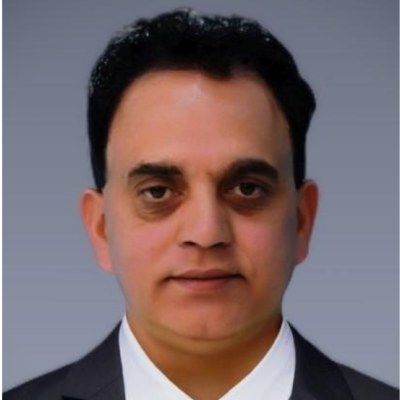
Pramod Kumar
Dr YS Parmar University of Horticulture & Forestry, India
Biography
Dr. Pramod Kumar serves as Associate Director (R&E) and Head, RHRTS/KVK, Dr YS Parmar University of Horticulture and Forestry, Kinnaur (HP),India. With over 18 years of experience dedicated to teaching, research and extension, he has worked extensively for enhancing the livelihoods of mountain farming communities. His major scientific contributions lie in plant nutrition and sustainable agriculture, particularly in regenerative agriculture, bio-stimulants, biofertilizers and rhizosphere microbiome, supported through several research projects. More than 15 fruit crop technologies and varieties developed under his guidance have been incorporated into the University’s Package of Practices. His key research includes the standardization of sequential natural biological formulations in legume–intercropped strawberry systems.
Dr. Kumar has contributed to the development of national and international courses on Natural Farming and Sustainable Food Systems, served as Subject Matter Expert for natural farming out-scaling programmes, and has been a Nodal officer under the FAO Green-Ag Project. He facilitated international collaborations with the University of Belgrade, Serbia, and Anglo-American Crop Nutrients, United Kingdom. Currently, he is the Co-PI of the European Commission funded ACROPICS project. A recipient of several prestigious awards and fellowships, he has over 90 publications and has represented his scientific work in Malaysia, Japan, Nepal, UAE and Serbia.
Tentative Title:
From Soil Health to Crop Wealth: The Transformative Power of Natural Bioformulations
Session/Panel Summary and Proposed Speakers:
From Ancient to Innovative: Microbial Solutions for Sustainability of Cultural Heritage
This session explores the synergy between ancient agricultural wisdom and modern microbial innovations, showing how traditional ecological knowledge aligns with contemporary microbiome science to sustain cultural heritage and promote resilient farming systems. It highlights how natural farming practices such as biofermentation, cow-based inputs, and local resource recycling—have long leveraged microbial ecology, now validated and advanced through modern agricultural microbiology and phytobiome research.
The session will focus on microbial tools like bioformulations, biostimulants, and microbial consortia that enhance nutrient cycling, suppress diseases, improve stress tolerance, and rejuvenate soils. Emphasis is placed on conserving cultural agricultural heritage through regenerative methods that reduce chemical inputs and strengthen traditional knowledge. By integrating indigenous practices with biotechnology, the session envisions climate-resilient, farmer-centric strategies supported by enabling policies, capacity building, and participatory research.
Key themes include:
Ancient Wisdom and Microbial Heritage
- Traditional soil fertility management rooted in natural microbial processes.
Agricultural Systems Microbiology and Phytobiome Innovation
- Current advances in soil, rhizosphere, and plant microbiome characterization.
- Harnessing endophytes, PGPR, and mycorrhizae for climate-smart agriculture.
Natural Farming and Regenerative Practices
- Microbial drivers of soil regeneration and carbon sequestration.
- Reduced chemical dependence through microbial functional diversity.
- Synergy of crop diversity, cover cropping, and minimal tillage on microbial health.
Microbial Solutions for Cultural Heritage Sustainability
- Protecting indigenous varieties through microbiome-centered cultivation methods.
- Microbial approaches to conserve heritage orchards and landraces.
- Cultural values of soil stewardship and community-based natural resource management.
Proposed Speakers
- Dr Pramod Kumar, RHRTS-Sharbo and KVK Kinnaur-YSPUHF, INDIA: Research interests: Plant nutrition, Sustainable and agro-ecological services, rhizosphere Microbiome and cropping systems.
- Dr Ni Luh Suriani, Professor, Udayana University, Bali, INDONESIA
Organic Agriculture - Dr Wong Mui Yun, Professor, Universiti Putra Malaysia, MALAYSIA
Pillar and Topic/Subtopic
PILLAR 2: ENVIRONMENTAL INNOVATIONS & SUSTAINABLE SOLUTIONS
2.1: Applied & Environmental Science
2.1b: Agricultural Systems Microbiology and Phytobiome Management


